Can You Get Underwater Metal Detectors?
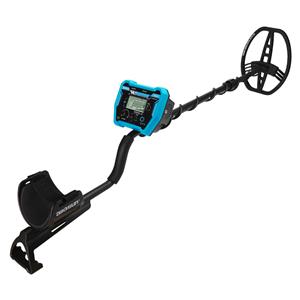
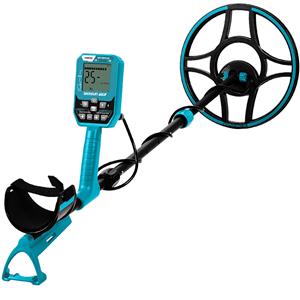
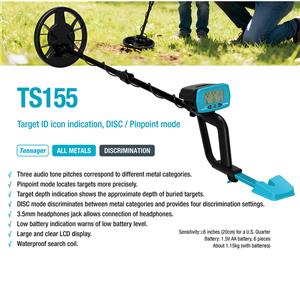
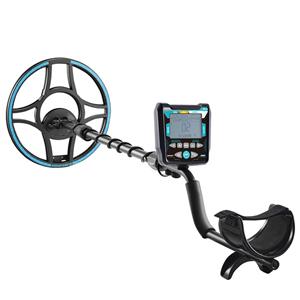
Underwater metal detectors are already available in the market, and they are specifically intended to be used by professional divers, people who are in the field of marine exploration, those involved in salvage operations, security inspection, and also for individuals who are just into recreational treasure hunting by the sea. Today's underwater metal detectors are a perfect mix of waterproof design, very sensitive electromagnetic detection, and powerful digital processing of signals that enable them to discover hidden metals in the water bodies such as rivers, lakes, and seas even under very difficult conditions at the great depths with a very high level of accuracy and stability.
For B2B buyers, distributors, and OEM/ODM partners, underwater metal detectors have become one of the rapidly expanding divisions in the worldwide test and measurement and exploration equipment industry, propelled by the marine engineering, coastal infrastructure inspection, security screening, and recreational diving markets.
This article is an overview of EEAT-compliant underwater metal detectors from the perspectives of technical aspects, industry requirements, buying concerns, actual cases as well as a procurement guide for international buyers.
1. What Is an Underwater Metal Detector?
An underwater metal detector is a detection tool that locates metals in aquatic environments, mainly:
seas
rivers
lakes
swimming pools
wet soils and muddy places
beach areas
Keeping the analogy of metal detectors within the environment of water aside for a second, if the readers compare the typical and underwater metal detector versions, the latter one is the only one that is able to survive through:
water pressure at great depths
corrosion caused from saltwater
underwater darkness or very low visibility situations
signal disturbances coming from mineralized seabeds
Core Working Principle
In general, underwater metal detectors operate on:
VLF (Very Low Frequency) technology for high sensitivity
Pulse Induction (PI) technology for deep-water and saltwater stability
Both of these technologies work by generating electromagnetic fields and sensing metallic objects when they interfere/disrupt the magnetic field.
2. Why Underwater Metal Detectors Are in High Demand
From an industrial and commercial point of view, demand is rising worldwide due to a few main factors:
2.1 Marine Infrastructure Expansion
Ports, offshore platforms, and underwater pipelines require continuous inspection.
2.2 Security Requirements
Harbor security, military diving units, and customs inspection teams use underwater detection systems.
2.3 Salvage and Recovery Industry
Shipwreck recovery, lost cargo retrieval, and archaeological exploration rely heavily on detection tools.
2.4 Recreational Diving Market Growth
The global diving tourism industry is expanding, increasing demand for consumer-grade underwater detectors.
Market Insight (Industry Trend)
The global metal detection equipment market continues to grow steadily due to industrial automation and marine safety requirements.
Underwater detection tools represent a high-value niche segment due to their technical complexity and durability requirements.
3. Key Buyer Pain Points in the Industry
For international buyers (distributors, wholesalers, OEM clients), common challenges include:
3.1 Poor Waterproof Performance
Many low-end products fail under deep water pressure or long-term saltwater exposure.
3.2 Unstable Detection Signals
False positives caused by mineralized seabeds or electromagnetic noise.
3.3 Limited Detection Depth
Cheap detectors often cannot exceed 1–2 meters effectively.
3.4 Weak After-Sales Support
Many suppliers lack global service systems or spare parts availability.
3.5 Lack of Certification
Without international certifications, products cannot enter regulated markets like Europe or North America.
4. Technical Requirements of High-Quality Underwater Metal Detectors
To meet professional standards, underwater metal detectors must include:
4.1 Waterproof Rating
Minimum: IP68
Professional grade: 30–60 meters depth resistance
4.2 Detection Stability
Advanced signal filtering
Ground balance adjustment
Saltwater mode optimization
4.3 High Sensitivity Sensors
Gold, copper, aluminum, iron detection
Adjustable sensitivity levels
4.4 Durable Materials
Anti-corrosion ABS or carbon composite
Stainless steel components
Sealed coil structures
4.5 Intelligent Signal Processing
Digital signal filtering
Audio + vibration alerts
LCD or LED display systems
5. Eastern Technology Group: Manufacturing Strength Behind Detection Technology
Eastern Technology Group runs a large production facility spanning over 6.67 hectares at Fujian – Eastern Technology Industrial Park which effectively supports advanced R&D and industrial manufacturing of test and measurement instruments.
5.1 Industrial Capacity
The industrial park comprises:
Scientific research laboratories
High-precision test systems
Advanced testers and calibration equipment
Intelligent automatic assembly lines
Doing so aids in stable product quality at a high level all the time along with having the ability to quickly produce global OEM/ODM orders.
5.2 Quality Management System
The group has implemented a very rigorous quality control system based on:
ISO9001 international quality standard
Complete production inspection covering all steps
Usage of intelligent testing systems that allow high-level accurate monitoring
5.3 Technology and Innovation Strength
Eastern Technology Group holds ownership of:
More than 200 international and domestic patents
Provincial industrial design center
Engineering technology R&D center
Innovation research center
Implanted technologies include:
Sensor application systems
Non-destructive measurement technology
Digital signal acquisition and processing
IoT and cloud-based measurement systems
6. Applications of Underwater Metal Detectors
Underwater detection equipment is used across multiple industries:
6.1 Marine Engineering
Pipeline inspection
Cable detection
Structural maintenance
6.2 Security & Defense
Harbor security screening
Military diving operations
Explosive object detection
6.3 Archaeology & Exploration
Shipwreck exploration
Historical artifact recovery
6.4 Industrial Maintenance
Dam inspection
Water treatment facility maintenance
Underwater construction monitoring
6.5 Recreational Use
Beach treasure hunting
Diving exploration
Hobby metal detection
7. Real-World Case Study (Application Scenario)
Case: Coastal Engineering Project in Southeast Asia
A marine construction contractor faced repeated issues with locating buried metallic debris near a coastal pipeline installation site.
Problems:
High saltwater interference
Poor visibility underwater
Traditional detectors failed to identify deep objects
Solution:
A pulse-induction underwater metal detector system was deployed with:
IP68 waterproof coil
Enhanced saltwater filtering mode
Deep scanning frequency adjustment
Results:
Detection efficiency improved by over 40%
Reduced manual excavation time
Improved construction safety compliance
8. OEM & ODM Advantages for Global Buyers
For international distributors and brands, OEM/ODM cooperation is critical.
Eastern Technology Group provides:
8.1 Custom Product Development
Brand customization (logo, packaging)
Hardware modification
Software tuning
8.2 Flexible Production System
Small batch sampling
Large-scale production capacity
Fast delivery cycles
8.3 Global Certification Support
Products comply with:
UL (USA)
ETL (USA)
CE (Europe)
GS (Germany)
These certifications ensure market access to North America and Europe.
9. How to Choose the Right Underwater Metal Detector (Buyer Guide)
Step 1: Define Usage Scenario
Diving depth requirements
Freshwater or saltwater environment
Step 2: Check Waterproof Rating
Minimum IP68 for underwater use
Higher ratings for deep-sea operations
Step 3: Evaluate Detection Depth
Shallow: 0–2 meters
Professional: 3–10+ meters
Step 4: Check Signal Stability
Anti-interference technology is critical
Step 5: Verify Certifications
CE / UL / ISO9001 are essential for import compliance
10. Common Buyer Questions (FAQ)
Q1: Can underwater metal detectors work in saltwater?
Yes. Professional models use pulse induction technology to reduce saltwater interference.
Q2: How deep can underwater metal detectors go?
Depending on design, most professional models can operate from 5 meters up to 60 meters.
Q3: Can they detect gold underwater?
Yes. Gold, silver, copper, and iron can be detected depending on sensitivity settings.
Q4: Are underwater metal detectors suitable for beginners?
Yes. Entry-level models include automatic calibration and simple alert systems.
Q5: What industries use underwater metal detectors the most?
Marine engineering, security defense, archaeology, and recreational diving.
Q6: Do manufacturers offer OEM customization?
Yes. Leading manufacturers like Eastern Technology Group support full OEM/ODM services.
11. Industry Challenges and Future Trends
11.1 Challenges
The precision in measuring underwater accuracy in deep-water environments is associated with very high technical barriers
Variants in salinity and pressure levels are the biggest sources of environmental interference
Advanced waterproof materials have being becoming less expensive
11.2 Future Trends
Recognition of signals based on AI
Systems of detection connected to IoT
Data mapping on the cloud
Lightweight underwater detectors that can be worn
The industry's direction is toward intelligent, highly integrated ecosystems of detection.
12. Conclusion
Indeed, underwater metal detectors not only exist but are evolving swiftly into sophisticated, smart detection systems that are widely used in marine engineering, security, archaeology, and recreational industries.
Besides the reliable waterproof construction, here are some other factors that are very important for B2B buyers and global distributors:
Stable detection performances
Strong certificate compliance
OEM/ODM capabilities
Long-term manufacturing abilities
Companies like Eastern Technology Group with its excellent industrial capacity, advanced research and development systems, and internationally recognized certifications, back the provision of premium underwater metal detection solutions that are in line with the global market needs.